When it comes to high-end jewelry investments, standard colorless diamonds are no longer the ultimate benchmark of exclusivity. Today, the world’s most discerning luxury collectors look far beyond conventional precious stones. They seek ultra-rare minerals whose global supplies are limited to a handful of specimens, making them significantly more valuable per carat than traditional gemstones.
For high-net-worth investors and connoisseurs, acquiring these rare crystals is more than a passion—it is a pursuit of tangible wealth, historical legacy, and geological miracles.
Below is an elite guide to the rarest gemstones in the world that every serious luxury collector must know.
1. Painite: The Rarest Mineral on Earth
For decades, painite held the official title in the Guinness Book of World Records as the world’s rarest mineral. Discovered in Myanmar in the 1950s by British gemologist Arthur C.D. Pain, only two individual crystals were known to exist on the planet for nearly half a century.
-
Why It’s Rare: Even with recent small discoveries in the Mogok region, ultra-high-clarity, facet-grade painite remains extraordinarily scarce. Its complex chemical composition combines calcium, zirconium, boron, aluminum, and oxygen, along with trace amounts of chromium and vanadium that give it its iconic deep brownish-red hue.
-
Collector’s Note: A beautifully faceted, transparent painite stone is the ultimate trophy for an elite mineral collection.
-
Estimated Price: $50,000 to $60,000 per carat.
2. Grandidierite: The Ethereal Neon Blue-Green Wonder
Discovered in 1902 in southern Madagascar by French mineralogist Alfred Lacroix, grandidierite is a breathtakingly beautiful borosilicate mineral. What makes it a top-tier asset for fine jewelry investment is its striking trichroic pleochroism—meaning it can display three distinct colors (dark blue-green, colorless/yellow, and sea green) depending on the angle of viewing.
-
Why It’s Rare: While low-grade translucent or opaque grandidierite is sometimes found, gem-quality, transparent specimens are virtually non-existent. The vast majority of clean stones weigh under one carat.
-
Investment Potential: Because of its hardness (7.5 on the Mohs scale), it is durable enough for custom luxury ring designs, making it highly sought after by high-end jewelry designers.
3. Musgravite: The Ultimate Elite Discovery
A member of the taaffeite family, musgravite was first identified in 1967 in the Musgrave Ranges of South Australia. For many years, it was considered a mythical stone, as finding a specimen large enough and clean enough to cut was deemed nearly impossible.
-
Why It’s Rare: Musgravite is so structurally similar to taaffeite that it cannot be distinguished by visual inspection or standard gemological tools alone. It requires advanced Raman spectroscopy testing to confirm its identity. As of today, fewer than twenty faceted musgravite gemstones have been officially verified worldwide.
-
Appearance: It ranges from a brilliant grayish-violet to deep, moody purple tones.
-
Estimated Price: Up to $35,000 per carat for verified, top-clarity specimens.
4. Red Beryl (Bixbite): The Scarlet Emerald
While emeralds and aquamarines are famous members of the beryl mineral family, red beryl—historically known as bixbite—is by far the rarest and most expensive sibling. It is found in gem-quality format only in one highly specific location: the Wah Wah Mountains of Beaver County, Utah, USA.
-
Why It’s Rare: The Utah Geological Survey estimates that for every 150,000 gem-quality diamonds mined globally, only a single crystal of red beryl is unearthed. Unlike emeralds, which are mined in multiple countries, red beryl's geological requirements are so hyper-specific that its global supply is fundamentally capped.
-
Collector’s Caution: Do not confuse natural red beryl with synthetic or lab-grown imitations. Always insist on premium lab certificates (such as GIA or equivalent international bodies) confirming natural origin.
-
Estimated Price: $10,000 to $20,000 per carat for small stones, skyrocketing exponentially for specimens exceeding two carats.
5. Alexandrite: The Iconic Color-Changing Jewel
Alexandrite is the quintessential collector's stone, famous for its dramatic color-changing optical phenomena. Discovered in Russia's Ural Mountains in the 1830s and named after Tsar Alexander II, it appears as an intense emerald green in natural daylight, but magically transforms into a vivid raspberry red under warm incandescent indoor lighting.
-
Why It’s Rare: The unique phenomenon is caused by a complex interaction of chrysoberyl crystals with chromium ions. Original Russian mines have long been exhausted. While newer deposits have been discovered in Brazil, Sri Lanka, and East Africa, stones with a 100% complete color change and pristine clarity are incredibly rare.
-
Market Demand: Alexandrite remains a cornerstone of heritage luxury jewelry houses, commanding premium prices at major auction houses like Christie's and Sotheby's.
High-End Collector's Cheat Sheet
To help navigate these incredible assets, here is a quick reference comparison table mapping rarity metrics across these elite minerals:
| Gemstone |
Primary Global Source |
Key Optical/Chemical Feature |
Average Price Range (Per Carat) |
| Painite |
Myanmar (Burma) |
Extreme boron-zirconium rarity |
$50,000 - $60,000+ |
| Grandidierite |
Madagascar |
Neon Blue-Green Trichroic Pleochroism |
$20,000 - $30,000 |
| Musgravite |
Australia, Antarctica, Greenland |
Requires Raman Spectroscopy to identify |
$35,000+ |
| Red Beryl |
Utah (USA) |
Intense ruby-red hue in beryl structure |
$10,000 - $20,000 |
| Alexandrite |
Brazil, Sri Lanka, East Africa |
Daylight Green to Incandescent Red shift |
$15,000 - $70,000 (Based on % shift) |
At Zovina, we don’t just create jewelry—we craft timeless expressions of luxury.


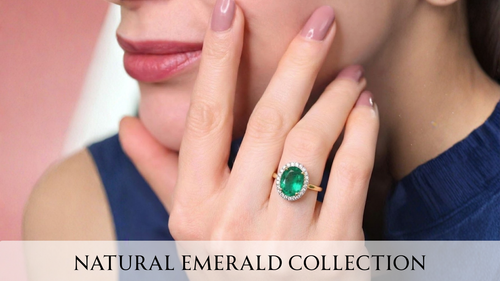


 The Rare Stone Collection