

 The Rare Stone Collection
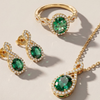
Emerald Gemstone Complete Buying Guide 2026: Price , Quality , Benefits & How to Choose
1. Understanding Emerald Quality: The 4 Cs
When selecting a high-quality emerald, the industry relies on the "4 Cs," but with a specific focus on Color and Clarity that differs from diamonds.
-
Color (The Most Critical Factor): The most desirable emeralds feature a pure verdant green hue with vivid color saturation. Stones that are too light are classified as "Green Beryl," while those with too much blue or yellow secondary undertones may see a slight dip in value.
-
Clarity (The "Jardin"): Unlike diamonds, emeralds almost always contain internal inclusions. These moss-like patterns are affectionately called the "Jardin" (French for garden). A flawless emerald is incredibly rare; however, you should look for "eye-clean" stones where inclusions do not reach the surface or compromise the stone's structural integrity.
-
Cut: Because emeralds are naturally brittle, the "Emerald Cut" (a rectangular step-cut) was specifically designed to protect the stone while showcasing its deep color. However, Cushion, Oval, and Pear shapes are also popular for bespoke jewelry designs.
-
Carat Weight: As the carat size increases, the price per carat for high-quality emeralds rises exponentially due to their scarcity in larger sizes.
2. Emerald Price Trends in 2026
The emerald price is influenced heavily by origin and treatment. In 2026, the market has seen a surge in demand for ethically sourced and untreated stones.
| Origin | Characteristics | Estimated Price Range (Per Carat) |
| Colombian | Famed for "Oil Drop" glow and pure green. | $500 - $10,000+ |
| Zambian | Known for higher clarity and bluish-green tints. | $200 - $5,000 |
| Brazilian | Often lighter in tone; great for daily wear jewelry. | $100 - $2,500 |
| Ethiopian | Newer to the market; brilliant neon-green colors. | $150 - $3,000 |
3. Astrological and Holistic Benefits
Beyond its physical beauty, the emerald is revered in various cultures for its metaphysical properties. In Vedic astrology, the emerald represents Mercury (Budha).
-
Enhanced Communication: It is believed to improve speech, confidence, and diplomatic skills, making it ideal for professionals and public speakers.
-
Financial Growth: Often called the "Stone of Success," it is linked to business growth and the attraction of wealth.
-
Intellectual Clarity: The stone is said to sharpen the mind, improve memory, and help in decision-making processes.
-
Physical Wellbeing: Traditionally, emeralds were used to soothe eye strain and improve respiratory health.
4. How to Choose the Right Emerald
Buying an emerald is a significant decision. Follow these steps to ensure you are making a wise purchase:
-
Demand a Lab Report: Never buy a high-value emerald without an official gemstone certification (e.g., GRS, GIA, or reputable local labs). This report verifies the stone’s origin and the level of "oil treatment" (Minor, Moderate, or Significant).
-
Inspect Under Natural Light: Artificial showroom lights can hide yellow tints. Always view the stone in natural daylight to see its true color saturation.
-
Check for Surface Reaching Fissures: Ensure the inclusions are internal. Fissures that reach the surface can make the stone prone to chipping during the setting process.
-
Consider the Setting: Since emeralds are a 7.5 to 8 on the Mohs scale, they are softer than sapphires. If you are choosing a ring, a bezel setting or a protective prong setting is recommended to safeguard the edges.
5. Ethical Sourcing and Investment Value
In 2026, the investment value of emeralds continues to outpace many other commodities. Collectors are increasingly focusing on "Investment Grade" stones—those over 2 carats with vivid color and minimal treatment. Furthermore, verifying the ethical footprint of your gemstone ensures that your luxury purchase supports fair mining practices.
6. The "Oil" Factor: Understanding Clarity Enhancement
Almost all emeralds undergo a process called "oiling" to fill surface-reaching fissures and improve clarity. In 2026, transparency regarding these treatments is the standard for the luxury jewelry market.
-
Insignificant/Minor Oil: These stones are highly prized. Only a trace amount of colorless oil (usually cedarwood oil) is used.
-
Moderate Oil: Common in most retail jewelry. It improves the look significantly without compromising the stone's integrity.
-
Significant/Heavy Oil: Usually found in lower-grade stones. These should be priced much lower as the oil heavily masks the stone's true quality.
-
Resin/Polymer Fillers: Be cautious of stones filled with hard resins or green-tinted oils. These are considered "treated" rather than "enhanced" and hold very little resale value.
7. Identifying Origin: Why It Matters
In the world of gemstone investing, the "where" is often as important as the "what."
-
The Colombian Legend: Stones from the Muzo or Chivor mines remain the gold standard. They possess a "warm" green that is rarely replicated elsewhere.
-
The Zambian Rise: In 2026, Zambian emeralds are the top choice for those seeking high clarity and "cool" tones. They are generally sturdier due to a higher iron content.
-
The Panjshir (Afghanistan) Newcomers: These stones are gaining massive traction for their exceptional "electric" green color, often rivaling the best Colombian material.
8. How to Spot a "Fake" or Synthetic Emerald
As technology advances, lab-grown emeralds (Hydrothermal or Flux-grown) have become visually stunning. Here is how to distinguish them:
-
Too Good to Be True: If a stone is over 2 carats, vivid green, and virtually flawless at a "budget" price, it is almost certainly lab-grown.
-
The "Red Flag" Inclusions: Natural emeralds have irregular, organic inclusions. Lab-grown stones often show "chevron" growth lines or nail-head inclusions that look too geometric under a loupe.
-
The Breath Test: While not definitive, natural stones dissipate fog from your breath much faster than glass or plastic imitations.
9. Care and Maintenance of Your Emerald
Emeralds require "tender loving care" compared to diamonds or sapphires. To preserve your investment:
-
Avoid Ultrasonic Cleaners: The high-frequency vibrations can shake the oil out of the fissures, making the stone look dull and cracked.
-
No Steam Cleaning: Extreme heat can cause the oil to expand and potentially crack the stone.
-
The "Last On, First Off" Rule: Always put your jewelry on after applying perfume or hairspray, and take it off before chores or exercise.
-
Re-oiling: Every few years, a professional jeweler can safely re-oil your emerald to restore its original luster.
10. 2026 Market Summary: Is it a Good Time to Buy?
The global supply of high-quality emeralds is tightening as older mines reach maturity. For collectors, 2026 represents a pivotal year where natural, untreated gemstones are seeing double-digit annual appreciation.
Expert Tip: If you are buying for investment, prioritize Color over Clarity. A slightly included stone with a "Vivid Green" (Muzo Green) rating will always outperform a clean stone with a pale or "washed out" color.
At Zovina, we don’t just create jewelry—we craft timeless expressions of luxury.