

 The Rare Stone Collection
How Are Rubies Made? A Complete Guide to Natural & Lab-Grown Rubies
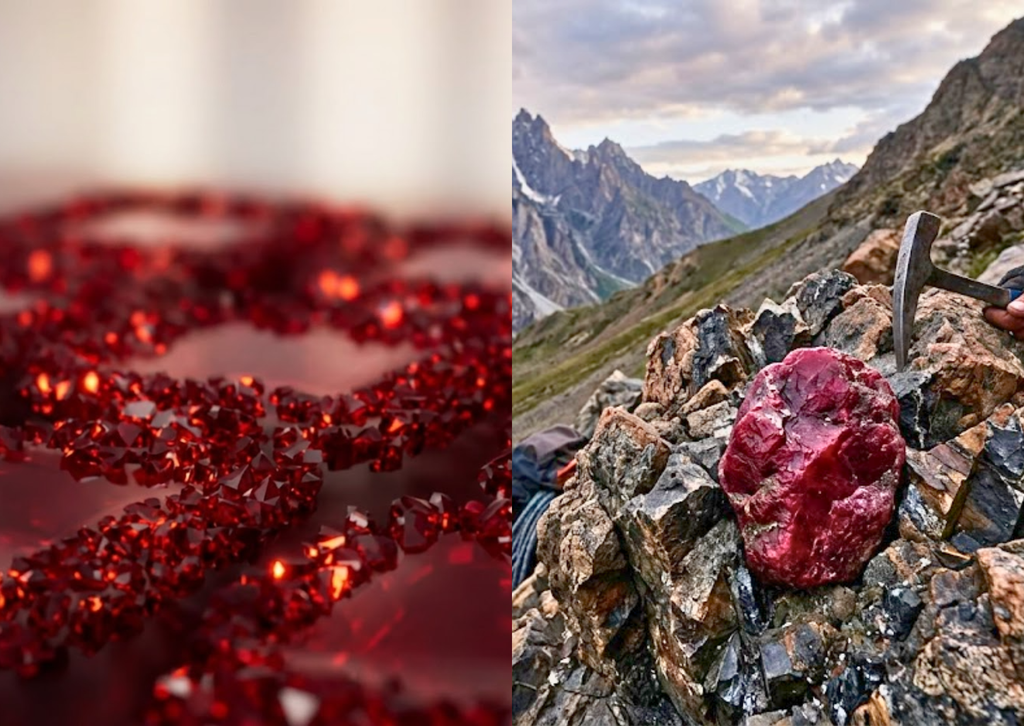
Whether you are an investor, a jewelry enthusiast, or looking for the perfect statement piece, understanding how these gemstones are formed is crucial. In this ultimate guide, we will dive deep into the fascinating science behind both natural and lab-created rubies, explore their differences, and help you make an informed decision.
The Core Chemistry: What is a Ruby?
Before exploring how they are made, let’s look at what a ruby actually is. Genetically speaking, a ruby is a variety of the mineral corundum (aluminum oxide). In its pure state, corundum is completely colorless.
So, how does it get that iconic, passionate red color?
The magic happens when trace amounts of the element chromium replace aluminum atoms in the crystal structure during formation. The intensity of the red color—ranging from an orange-red to the highly coveted, deep "pigeon’s blood" red—depends entirely on the concentration of chromium present.
Did You Know? Sapphires and rubies are actually biological siblings. They are both made of corundum. If the gem is red, it is a ruby; if it is any other color (blue, yellow, pink, green), it is a sapphire!
Part 1: How Natural Rubies Are Formed (The Geological Miracle)
Natural rubies are a true miracle of nature. They require a highly precise, almost impossible combination of geological conditions to form deep within the Earth’s crust. This rare process takes millions of years.
1. The Right Ingredients (The Chromium Conundrum)
For a ruby to form, nature must bring aluminum and oxygen together under immense heat and pressure. However, there is a catch: silica and iron must be absent.
-
Silica is incredibly abundant in the Earth's crust, and if it is present, it bonds with aluminum to form other minerals (like quartz or emeralds) instead of corundum.
-
Iron, if present, turns the gemstone brown or blue, ruining the pure red hue.
-
Finally, chromium—a very rare element in the Earth’s crust—must find its way into the mix.
2. Extreme Heat and Pressure
Natural rubies typically form in two geological environments:
-
Metamorphic Rocks (Marble-Hosted): This occurs when ancient limestone beds undergo intense heat and pressure from colliding tectonic plates. This process purifies the rock into marble and coaxes chromium into the corundum crystal grid. This environment produces the world’s finest rubies (like those from Myanmar/Burma), which boast a brilliant fluorescent glow under UV light because they contain very little iron.
-
Basaltic Rocks (Magma-Hosted): Rubies can also form deep inside the mantle and be carried to the surface by volcanic eruptions. These rubies (often found in Thailand and Cambodia) tend to contain higher levels of iron, giving them a darker, richer, slightly brownish-red appearance.
3. Mining and Extraction
Once tectonic forces push these gemstone deposits closer to the surface, they are mined using both traditional artisanal methods and modern open-cast mining. Because natural rubies with exceptional color and clarity are so incredibly rare, high-carat natural rubies often command prices that surpass diamonds of equivalent size.
Part 2: How Lab-Grown Rubies Are Made (The Scientific Mastery)
Because natural rubies are scarce and highly expensive, scientists spent decades trying to replicate nature's recipe in a controlled environment. Today, lab-grown rubies are physically, chemically, and optically identical to natural rubies.
There are two primary methods used to grow rubies in a laboratory:
1. The Flame Fusion Method (Verneuil Process)
Invented in the late 19th century by French chemist Auguste Verneuil, this is the most common and cost-effective way to create rubies.
-
The Process: Finely powdered aluminum oxide mixed with chromium oxide is dropped through a high-temperature oxygen-hydrogen flame (reaching over 2000°C).
-
The Result: The powder melts and drips onto a rotating pedestal, where it solidifies into a cylinder-shaped crystal called a "boule."
-
Characteristics: These rubies can be grown in just a few hours. Under a microscope, they often display curved growth lines (curved striae) that reveal their laboratory origin.
2. The Flux Growth Method
This is a much more sophisticated, time-consuming, and expensive process, but it produces rubies of spectacular quality that closely mimic natural stones.
-
The Process: A solid material called a "flux" (a chemical solvent) is melted together with aluminum oxide and chromium at high temperatures in a platinum crucible. Once the ingredients dissolve into a liquid solution, the temperature is very slowly lowered over several weeks or months.
-
The Result: As the liquid cools, ruby crystals begin to grow naturally around a seed crystal, just like they would deep in the Earth.
-
Characteristics: Because they grow slowly over weeks, flux rubies develop natural-looking angular growth lines and inclusions, making them incredibly difficult to distinguish from natural rubies without professional gemological equipment.
Natural vs. Lab-Grown Rubies: A Head-to-Head Comparison
If you are trying to decide which ruby is right for your collection, here is a quick breakdown of how they compare across key factors:
| Feature | Natural Rubies | Lab-Grown Rubies |
| Chemical Composition | Aluminum Oxide ($Al_2O_3$) + Chromium | Aluminum Oxide ($Al_2O_3$) + Chromium |
| Time to Form | 10 to 50 Million Years | Hours to Months |
| Clarity & Inclusions | Almost always contain natural inclusions (rutile needles/silk, fingerprints) | Highly clean; may show curved lines or flux remnants under magnification |
| Price Point | Premium/Investment pricing (increases exponentially with carat weight) | Highly affordable and budget-friendly |
| Sustainability | Requires traditional mining | Eco-friendly option with a transparent supply chain |
| Value Retention | High resale value; appreciates over time as an asset | Excellent fashion jewelry value, but low investment resale value |
How Gemologists Tell Them Apart: The Role of Certifications
To the untrained eye, a top-quality lab-grown ruby and a flawless natural ruby look completely identical. Both will scratch glass easily (scoring a 9 on the Mohs hardness scale, second only to diamonds), and both possess the same mesmerizing fire.
So, how do you know what you are buying?
Professional gemologists look for inclusions (internal birthmarks) under high magnification:
-
Natural rubies almost always contain tiny intersecting needles of a mineral called rutile, known as "silk." This silk softens the light and gives natural rubies a velvety glow.
-
Lab-grown rubies lack this natural silk. Instead, they might show microscopic gas bubbles or platinum flakes from the laboratory crucible.
Pro Tip: When buying a high-value ruby jewelry piece, always request a certificate from an accredited independent gemological laboratory (such as GIA, IIGJ). A certified grading report guarantees the origin, weight, cut, and authenticity of your gemstone, ensuring absolute peace of mind.
Conclusion: Which Ruby Should You Choose?
Both natural and lab-grown rubies hold a unique place in the world of luxury jewelry.
-
Choose a Natural Ruby if you value rarity, historical prestige, and investment value. Owning a natural ruby means owning a finite piece of Earth's ancient history—a true heirloom to be passed down through generations.
-
Choose a Lab-Grown Ruby if you desire flawless clarity, a vibrant, rich red color, and a large carat size while staying within a specific budget. They offer an ethical, stunning, and durable option for everyday luxury wear.
No matter which path you choose, the striking radiance of a ruby is guaranteed to turn heads and elevate any jewelry design into a timeless masterpiece.
At Zovina, we don’t just create jewelry—we craft timeless expressions of luxury.