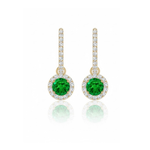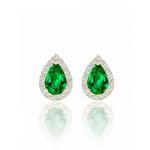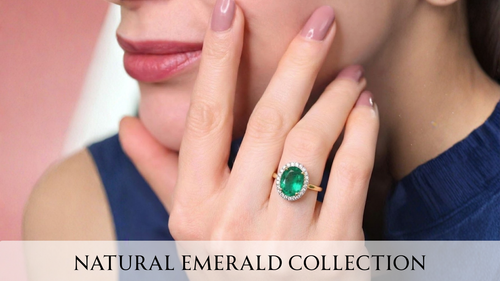


 The Rare Stone Collection
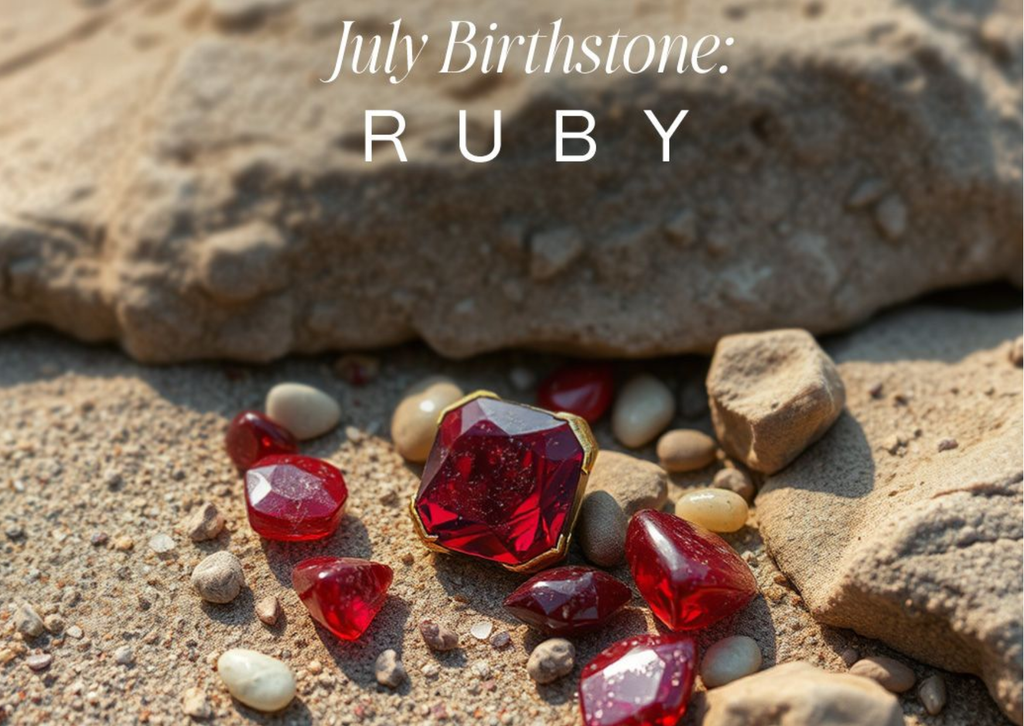
July Birthstone Ruby
1. What is a Ruby? The Science Behind the Fire
To truly appreciate the ruby, it helps to understand what makes it so rare and valuable.
-
The Mineral Family: Rubies belong to the corundum mineral family. In its pure form, corundum is completely colorless.
-
The Red Factor: The vibrant red color that defines a ruby is caused by the presence of the trace element chromium. The more chromium present, the deeper and more intense the red.
-
Ruby vs. Sapphire: Here is a fascinating gemological fact—rubies and sapphires are essentially the same stone! Any gem-quality corundum that is red is classified as a ruby. Every other color of corundum (blue, pink, yellow, green) is classified as a sapphire.
-
Durability: On the Mohs scale of mineral hardness, rubies score a 9 out of 10. This makes them incredibly durable, second only to diamonds ($10$). This exceptional hardness makes ruby jewelry perfect for everyday wear, including engagement rings.
2. The Captivating History and Mythology of Rubies
The name "ruby" is derived from the Latin word ruber, which simply means red. However, its history is anything but simple.
Ancient India: The King of Gems
In ancient Sanskrit, the ruby was called Ratnaraj, which translates to "King of Precious Stones." Ancient Indians believed that those who offered fine rubies to the god Krishna were granted rebirth as emperors in a future life. Rubies were divided into castes, much like human society, with the flawless "Brahmin" rubies believed to offer absolute protection from harm.
Warriors and Protection
In Burma (now Myanmar), a source of some of the world's finest rubies, ancient warriors believed the stone made them invincible in battle. However, simply wearing the stone on a ring or necklace wasn’t enough—they would physically insert the rubies into their flesh so the gem became a part of their bodies.
The Stone of Passion and Love
In the Middle Ages, Europeans wore rubies to guarantee health, wealth, wisdom, and success in love. Because its color closely resembles blood, the stone was deeply linked to the life force, vitality, and passion.
3. Meaning and Healing Properties of the July Birthstone
Beyond its physical beauty, the July birthstone is highly revered in the world of crystal healing and metaphysics. If you wear a ruby, it is believed to bring a variety of spiritual and emotional benefits into your life.
Emotional and Spiritual Benefits
-
Boosts Confidence and Courage: If you struggle with self-doubt, the ruby is said to ignite your inner fire, helping you overcome fear and step into your personal power.
-
Attracts Wealth and Success: Historically known as a stone of abundance, it is believed to help the wearer retain wealth and maintain motivation to achieve professional goals.
-
Ignites Passion: As a stone of the heart, rubies stimulate romantic love, passion, and devotion, making them a popular gift for milestone wedding anniversaries (specifically the 40th anniversary).
Physical Connections
In alternative medicine and chakra healing, the ruby is aligned with the Root Chakra (Muladhara) and the Heart Chakra (Anahata). It is believed to:
-
Improve blood circulation and strengthen the heart.
-
Boost energy levels and combat fatigue.
-
Detoxify the body and stimulate the adrenal glands.
4. Understanding Ruby Quality: The 4 Cs
If you are looking to purchase a ruby, you need to know how they are valued. Just like diamonds, rubies are evaluated using the 4 Cs: Color, Clarity, Cut, and Carat Weight.
Color (The Most Important Factor)
Color is the single most critical factor in determining a ruby's value. Gemologists evaluate color based on three criteria:
-
Hue: The primary color (which must be red) and any secondary overtones (like purple, pink, or orange).
-
Tone: How light or dark the stone is.
-
Saturation: The vividness or intensity of the color.
What is "Pigeon’s Blood"?
The most valuable and sought-after ruby color is a vibrant, deep red with a soft, glowing blue undertone. This rare and highly prized color is universally referred to in the trade as "Pigeon’s Blood" red.
Clarity
Flawless rubies are extraordinarily rare. Almost all natural rubies contain internal imperfections called inclusions. Gemologists refer to these inclusions as "silk" (slender needles of the mineral rutile). Far from being defects, these inclusions prove the stone is natural and can even create a beautiful, velvety glow by scattering light. However, if inclusions threaten the stone's durability or block its transparency, they will lower the price.
Cut
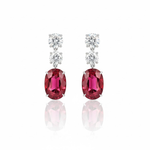
Because rubies are so valuable per carat, gem cutters (lapidaries) focus on preserving as much weight as possible. Rubies are most commonly fashioned into oval and cushion cuts, which maximize the weight while beautifully displaying the stone’s color and brilliance.
Carat Weight
Fine-quality rubies over 1 carat are rare, and the price jumps exponentially as the size increases. A high-quality 3-carat ruby can easily cost far more per carat than a diamond of the equivalent size.
5. Synthetic vs. Treated vs. Natural Rubies
When shopping for July birthstone jewelry, you will encounter various terms on price tags. Understanding these differences will ensure you get exactly what you pay for.
| Ruby Type | Description | Value |
| Natural, Untreated | Mined from the earth with no alterations other than cutting and polishing. Extremely rare. | Highest Value |
| Heat-Treated | Natural rubies subjected to high heat to improve color and clarity. An industry-standard practice. | Moderate to High Value |
| Lab-Grown / Synthetic | Created in a lab with the exact same chemical and physical properties as natural rubies. | Affordable |
| Imitation / Simulant | Glass, cubic zirconia, or cheaper red stones (like garnet) made to look like ruby. | Lowest Value |
6. How to Style and Care for Your Ruby Jewelry
Rubies are incredibly versatile and look breathtaking when set in various metals.
-
Yellow Gold: Creates a classic, warm, and regal vintage look.
-
White Gold & Platinum: Offers a modern, high-contrast, and striking contemporary aesthetic.
-
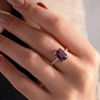
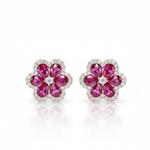
Diamond Accents: Because of their deep color, rubies look spectacular when framed by bright white diamonds, which draw out the gem's inner brilliance.
Cleaning and Maintenance
While rubies are exceptionally tough, they still require proper care to maintain their lifetime brilliance.
-
The Safe Method: Soak your ruby jewelry in a bowl of warm water mixed with a few drops of mild dish soap. Use a soft-bristled toothbrush to gently clean behind the stone where dirt collects. Rinse with clean water and pat dry with a lint-free cloth.
-
Avoid Harsh Chemicals: Keep your rubies away from harsh household cleaners, bleach, and acids.
-
Storage: Store your ruby jewelry in a separate fabric-lined compartment or a soft pouch. Because rubies are so hard, they can scratch softer gemstones (like opals or pearls) and can easily be scratched by diamonds.
Final Thoughts: The Gift of a Lifetime
Whether you are celebrating a July birthday, honoring a 40th wedding anniversary, or simply treating yourself to a piece of history, the ruby is a gemstone that stands the test of time. Its rich, fiery red hue serves as a daily reminder of passion, strength, and the unyielding beauty of nature. Investing in a ruby isn't just about buying jewelry—it's about owning a timeless treasure that will radiate brilliance for generations to come.
At Zovina, we don’t just create jewelry—we craft timeless expressions of luxury.