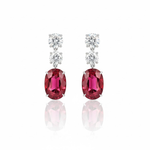


 The Rare Stone Collection
Tanzanite stunning rare and tricky

In the world of high-end jewelry, few stones carry the mystique of Tanzanite. Known for its breathtaking trichroic colors and its singular origin, tanzanite is often described as the "gemstone of the 20th century." But don't let its beauty fool you; this stone is as temperamental as it is stunning.
Whether you are a collector, an investor, or someone looking for a unique engagement ring, understanding the "tricky" nature of tanzanite is essential.
1. A Geological Miracle: One Place on Earth
While diamonds are found across several continents, tanzanite is found in only one place: a small strip of land near Mount Kilimanjaro in Tanzania. The mining area is roughly 4km long and 2km wide.
Geologists believe the circumstances that created tanzanite $585$ million years ago were so unique that the chances of finding it elsewhere are one in a million. This is why tanzanite is often called "the gemstone of a single generation."
2. The "Tricky" Science: Trichroism and Lighting
Tanzanite is famous for its trichroism. This means that when you look at the crystal from different angles, it shows three different colors:
-
Blue
-
Violet
-
Burgundy/Red
The Lighting Shift
This is where it gets tricky for buyers. A tanzanite might look like a deep, royal blue under the fluorescent lights of a jewelry store, but the moment you step into the afternoon sun or sit under incandescent "warm" lights, it may shift dramatically toward a vivid purple or violet.
Pro Tip: Always view tanzanite in multiple lighting conditions before purchasing. The "best" stones are those that maintain a rich saturation regardless of the light source.
3. The Heat Secret
Almost all tanzanite on the market today is heat-treated. When it comes out of the ground, the stones are often a muddy brownish-zosite. It takes a controlled heating process (usually around 600°C) to reveal that signature "Tanzanite Blue."
While this is a standard and accepted practice in the industry, it’s a "tricky" detail for purists who seek unheated stones—which are incredibly rare and command a massive premium.
4. Durability: Handle with Care
Tanzanite is a "stunning but soft" gem. On the Mohs Scale of Hardness, tanzanite sits at a 6.5 to 7. For comparison, diamonds are a 10 and sapphires are a 9.
-
The Risk: It has "perfect cleavage," meaning a hard strike in a specific direction can cause the stone to shatter or chip.
-
The Verdict: It is perfect for earrings and necklaces, but if you want it for an engagement ring, it requires a protective setting (like a bezel) and a wearer who isn't too rough with their hands.
Tanzanite Buying Guide: The 4Cs
| Factor | What to Look For |
| Color | The deeper the blue/violet, the more expensive. Pale stones are cheaper. |
| Clarity | Look for "Eye Clean" stones. Avoid visible inclusions. |
| Cut | A good cut minimizes the "window" (the pale center) and maximizes brilliance. |
| Carat | Large tanzanites (over 5 carats) show the most intense color. |
Why Buy Tanzanite Now?
Experts suggest that at current mining rates, the supply of tanzanite will be exhausted within the next 10 to 20 years. As the "Tanzanite Bridge" closes, the rarity—and the price—is expected to skyrocket. It isn't just jewelry; it's a finite piece of Earth's history.
Conclusion: Is it Worth It?
Yes, tanzanite is "tricky." It’s sensitive to heat, it’s softer than a sapphire, and its color changes like a mood ring. But that is exactly what makes it magical. It’s a stone for someone who appreciates rarity over routine.
At Zovina, we don’t just create jewelry—we craft timeless expressions of luxury.