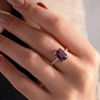


 The Rare Stone Collection
Difference between Amethyst & Citrine Ring
1. The Mineral Connection: The Quartz Family
At their core, both Amethyst and Citrine are varieties of Macrocrystalline Quartz. On the Mohs Scale of Hardness, both rank at 7, making them excellent choices for daily wear in rings. They are resistant to scratches and maintain their luster over time, which is why they are staples in high-end jewelry catalogs.
The primary difference lies in the trace elements present during their formation:
-
Amethyst: Gets its iconic purple hue from irradiation and the presence of iron impurities.
-
Citrine: Owes its yellow-to-orange glow to a different state of iron within the crystal lattice.
2. Aesthetic Appeal: Color, Clarity, and Cuts
When selecting a ring, the visual impact is the first priority. Both stones are celebrated for their high clarity, often appearing "eye-clean" (no visible inclusions).
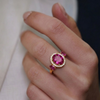
The Allure of Amethyst
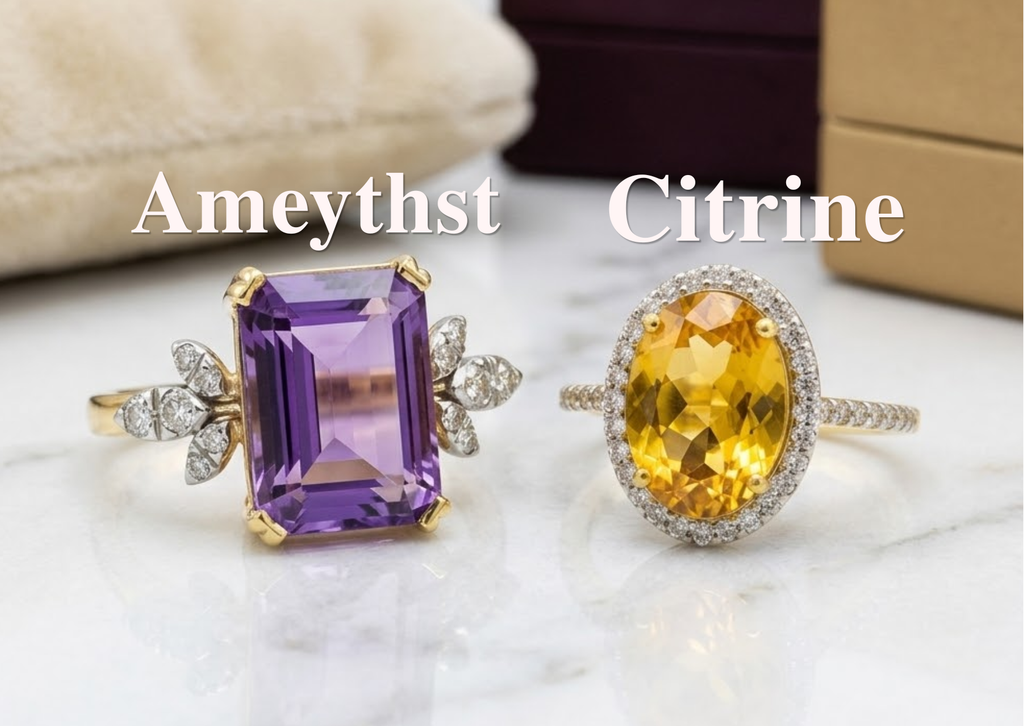
Amethyst ranges from a light, "Rose de France" lilac to a deep, velvety "Bishop’s Purple."
-
Best Cuts: To maximize its rich color, Amethyst is often seen in Cushion, Oval, and Octagon (Emerald) cuts.
-
Metal Pairing: It looks exceptionally sophisticated in White Gold or Silver, which highlights its cool undertones.
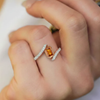
The Radiance of Citrine
Citrine is known as the "Merchant’s Stone" and ranges from pale lemon yellow to a deep "Madeira" orange-red.
-
Best Cuts: Citrine shines brilliantly in Pear and Round Brilliant cuts, which capture and reflect light to mimic a golden glow.
-
Metal Pairing: Yellow Gold or Rose Gold settings enhance the natural warmth of Citrine, creating a seamless, luxurious look.
3. Investment and Rarity
From a market perspective, Citrine is significantly rarer in its natural form than Amethyst. Interestingly, much of the Citrine on the market today is actually heat-treated Amethyst. When Amethyst is heated to high temperatures, it shifts from purple to golden-yellow.
-
Natural Citrine: Usually pale yellow and more expensive due to rarity.
-
Heat-Treated Citrine: Displays a deeper orange tint and is widely used in commercial jewelry for its vibrant "sunny" appeal.
-
Amethyst Pricing: High-quality, deep purple Amethysts are valued by collectors, especially those with "red flashes" when viewed under light.
4. Symbolic and Astrological Significance
Both stones carry heavy symbolic weight, often influencing which ring a person chooses to wear on their ring finger.
| Feature | Amethyst | Citrine |
| Birthstone | February | November |
| Zodiac | Pisces, Aquarius | Scorpio, Sagittarius |
| Symbolism | Peace, Sobriety, Protection | Prosperity, Energy, Joy |
| Vibe | Calm & Spiritual | Energetic & Successful |
5. SEO Keywords for Gemstone Enthusiasts
To help you find the best pieces online or learn more about your jewelry, keep these SEO keywords in mind:
-
Natural Amethyst Ring vs Citrine
-
Jewelry investment gemstones
-
Purple quartz vs yellow quartz
-
Gemstone certification for rings
-
Durable stones for daily wear rings
-
Deep purple Amethyst clarity
-
Golden Citrine ring benefits
6. Care and Maintenance
Since both stones have a hardness of 7, they are sturdy but not indestructible. To keep your ring looking like it just came out of a professional photoshoot:
-
Avoid Harsh Chemicals: Remove your ring before using cleaning agents or swimming in chlorinated pools.
-
Ultrasonic Cleaning: Generally safe for Quartz, but if your stone has heavy inclusions or is heat-treated, stick to warm soapy water and a soft brush.
-
Storage: Store them in a fabric-lined box away from harder stones like Diamonds or Sapphires to prevent surface scratches.
Final Verdict: Which should you choose?
Choose an Amethyst ring if you prefer a look of mystery, royalty, and calm. It is the perfect companion for formal evening wear and traditional attire.
Choose a Citrine ring if you want to invite "solar energy" and success into your life. Its vibrant yellow tones are perfect for brightening up professional outfits and adding a touch of modern luxury to your everyday style.
The Science of Color: Why are they different?
Both Amethyst and Citrine are silicon dioxide minerals. The magic happens at the atomic level.
-
Amethyst gets its regal purple from iron impurities that have been exposed to natural radiation within the earth.
-
Citrine, on the other hand, contains iron in a different oxidation state, resulting in shades ranging from pale champagne to deep honey-orange.
Rarity and Market Value
In the world of gemstones, Natural Citrine is actually much rarer than Amethyst. Because of this rarity, many Citrine rings in the market feature "Heat-Treated Amethyst."
-
The Heat Treatment Process: When Amethyst is heated to approximately 470°C to 560°C, it turns into a bright orange-yellow.
-
Value Consistency: While both are affordable compared to Sapphires or Rubies, a deep "Siberian" Purple Amethyst and a "Madeira" Orange Citrine are considered the "Investment Grade" versions of these stones.
Choosing the Right Cut for Your Ring
The cut of a gemstone determines how it reflects light and how the color is perceived on your finger.
-
For Amethyst Rings: Deep Cushion and Oval cuts are preferred. These shapes hold the purple saturation better, preventing the stone from looking "washed out" in the center.
-
For Citrine Rings: Octagon (Emerald) cuts and Trillions are highly popular. The step-cuts of an Octagon highlight the clarity of Citrine, making it look like a drop of liquid gold.
Styling and Versatility
Choosing between these two often depends on your wardrobe and the "vibe" you want to project.
-
The Amethyst Vibe: Often associated with royalty and calmness. An Amethyst ring is a perfect statement piece for formal evening events or traditional cultural attire like a silk saree. It stands out beautifully against neutral tones like grey, black, or cream.
-
The Citrine Vibe: Known as the "Success Stone." Citrine is energetic and bright. It is the ideal "Power Ring" for professional settings and daytime luxury. It pairs exceptionally well with Earth tones, browns, and olive greens.
Authenticity: The Importance of Certification
Whether you are buying a 5-carat Amethyst or a 10-carat Citrine, Certification is non-negotiable. A professional lab report will confirm:
-
Species: Confirms it is natural Quartz.
-
Color Origin: Whether the color is natural or enhanced by heat.
-
Carat Weight & Dimensions: Ensuring you get exactly what you pay for.
Always look for a clean background in product photos and high-end reflections to judge the surface polish of the stone before purchasing.
Final Comparison Table
| Feature | Amethyst | Citrine |
| Primary Color | Purple / Violet | Yellow / Orange |
| Hardness (Mohs) | 7 | 7 |
| Rarity | Common (High quality is rarer) | Natural is very Rare |
| Best Metal | Silver, White Gold, Platinum | Yellow Gold, Rose Gold |
| Ideal Finger | Ring Finger (Anamika) | Ring Finger or Index Finger |
At Zovina, we don’t just create jewelry—we craft timeless expressions of luxury.