

 The Rare Stone Collection
The World's Most Coveted Gemstones and What Makes Them So Rare
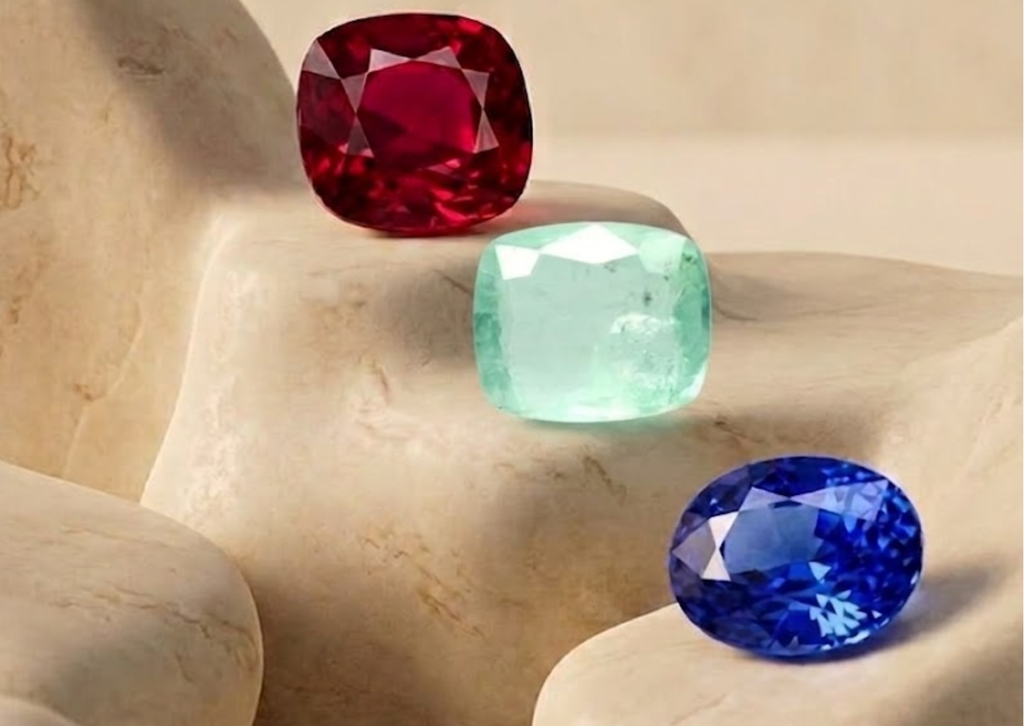
For centuries, human history has been shaped by the allure of precious stones. From the crowns of monarchs to the red carpets of Hollywood, high-end gemstones are far more than mere ornaments—they are portable wealth, geological miracles, and the ultimate symbols of prestige.
While diamonds often dominate the commercial bridal market, true connoisseurs and investors know that the world of colored gemstones holds treasures that are vastly rarer, more expensive, and visually spectacular.
But what exactly elevates a mineral from a beautiful rock to a multi-million dollar masterpiece? Below, we dive into the world’s most coveted gemstones, the fascinating science behind their existence, and why global demand for these rare treasures continues to skyrocket.
1. Kashmir Blue Sapphire (Neelam): The Ultimate Royalty
When discussing the pinnacle of colored stones, the Kashmir Blue Sapphire invariably leads the conversation. Discovered in the remote, snow-capped Himalayas in the early 1880s after a landslide, the original mine was completely exhausted in just a few decades. Today, authentic Kashmir sapphires are almost exclusively found at high-end auction houses like Sotheby's and Christie's.
What Makes It So Rare?
-
The "Velvet" Glow: Kashmir sapphires possess a unique, tiny inclusion pattern known as "silk" (fine rutile needles). This silk scatters light, giving the stone a dreamy, velvety appearance that eliminates sharp shadows inside the gem.
-
Cornflower Blue Hue: Unlike commercial sapphires that can look dark or inky in low light, a top-tier Kashmir sapphire maintains its vibrant, vivid "cornflower blue" under any lighting condition.
-
Extinct Origin: Because the legendary mines are depleted, buying a Kashmir Neelam is not just a jewelry purchase; it is a serious financial investment in a finite historical artifact.
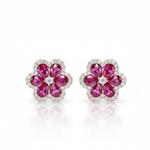
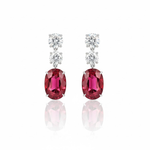
2. Pigeon’s Blood Ruby: The King of Precious Stones
In the gemstone trade, the phrase "Pigeon’s Blood" represents the absolute gold standard for rubies. Historically sourced from the legendary Mogok Valley in Myanmar (formerly Burma), these stones have commanded higher per-carat prices than colorless diamonds of equivalent size.
What Makes It So Rare?
-
Fluorescent Glow: Burmese rubies are formed in marble rock, which is exceptionally low in iron. A low iron content allows the chromium (the element that makes the ruby red) to fluoresce intensely under ultraviolet light—including natural sunlight. The stone literally seems to glow from within like a burning ember.
-
Perfect Color Saturation: The term "Pigeon's Blood" describes a pure, vibrant red with a subtle hint of blue. It is a color so intense that it completely redefines luxury.
-
Size Limitations: Finding a clean, untreated ruby over 5 carats is an extraordinary geological anomaly.
3. Colombian Emerald (Panna): The Green Fire
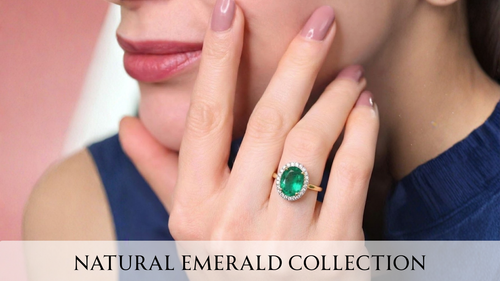
While emeralds are mined globally—from Zambia to Brazil—Colombian Emeralds remain the undisputed heavyweights of the luxury jewelry world. Muzo, Chivor, and Coscuez are names whispered with reverence among elite designers.
What Makes It So Rare?
-
Sedimentary Hydrothermal Origin: Unlike most emeralds formed in igneous rock, Colombian emeralds are born in sedimentary black shale. This unique geological setting minimizes impurities like iron, resulting in a mesmerizingly pure, warm, grassy-green hue.
-
The "Jardin" (Garden): Emeralds are inherently included stones. In Colombia, these internal fractures form beautiful, delicate patterns known as the Jardin (French for garden). Instead of lowering the value, a beautiful, non-cloudy jardin proves the stone's natural, untampered origin.
-
Chroma and Glow: The specific chromium and vanadium balance in Colombian soil gives these stones an unparalleled "green fire" that catches the eye from across a crowded room.
4. Natural Yellow Sapphire (Pukhraj): The Radiant Investment
In recent years, the global market has seen an incredible surge in demand for Natural Yellow Sapphires. While historically revered in Asian cultures for its astrological significance, the international luxury market has fully embraced this gem for its brilliant, sun-kissed aesthetic.
What Makes It So Rare?
-
The Unheated Premium: The vast majority of yellow sapphires on the commercial market undergo high-temperature heat treatment to artificially enhance their color. Finding a completely unheated, eye-clean yellow sapphire with natural, vibrant saturation is incredibly rare.
-
The Canary Yellow Demand: Intense "Canary" or "Lemon" yellow hues are highly sought after by modern designers as a brighter, more durable alternative to yellow diamonds. With a hardness rating of 9 on the Mohs scale, it offers exceptional longevity for daily wear.
5. Alexandrite: The "Emerald by Day, Ruby by Night"
First discovered in Russia’s Ural Mountains in the 1830s and named after Tsar Alexander II, Alexandrite is the ultimate chameleon of the mineral kingdom.
What Makes It So Rare?
-
Dramatic Color Change: Alexandrite is a variety of chrysoberyl that possesses a mind-boggling optical property: it changes color based on the light source. In natural daylight, it appears a crisp, mossy green. Under incandescent indoor lighting, it shifts into a rich, raspberry red.
-
Geological Improbability: It requires a rare combination of beryllium and chromium. Geologically, these two elements are rarely found in the same rock formations, making the birth of Alexandrite an absolute freak of nature.
The Economics of Luxury: Why Gemstones Trump Diamonds for Investors
For decades, aggressive marketing convinced the world that diamonds were the ultimate luxury asset. However, the modern luxury landscape is shifting.
While lab-grown diamond technology has disrupted the traditional diamond supply chain, natural colored gemstones cannot be replicated with the same historical or geological prestige. A lab can grow a diamond, but it cannot recreate the centuries of geological history, the specific trace elements, or the famed mine origins (like Muzo or Kashmir) that give rare colored stones their soul.
The Importance of Third-Party Certification
Because the stakes are so high, serious collectors and buyers never purchase premium stones without ironclad provenance. Top-tier international laboratories evaluate these gems for:
-
Origin Verification: Confirming if a sapphire is genuinely from Kashmir, Ceylon, or Madagascar.
-
Treatment Detection: Ensuring the stone is entirely natural and has not been subjected to fracture-filling, beryllium diffusion, or heavy heat treatment.
At Zovina, we don’t just create jewelry—we craft timeless expressions of luxury.