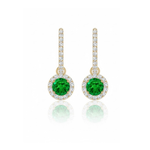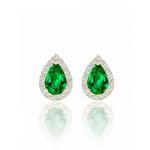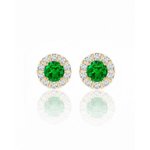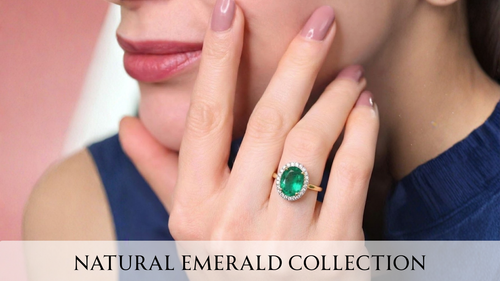
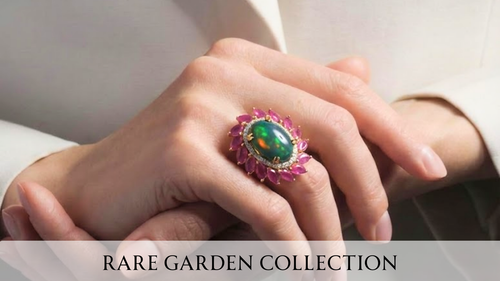
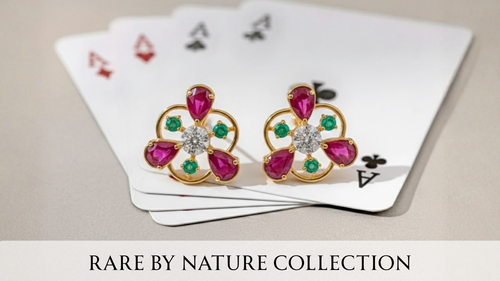
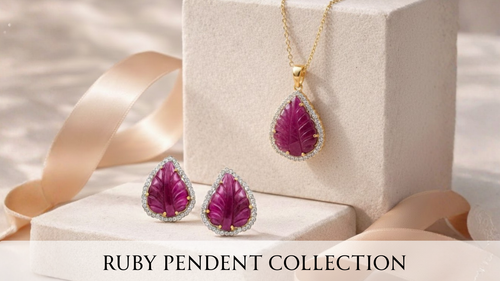


 The Rare Stone Collection
How to Identify Real Luxury Gemstone Jewelry Before You Buy
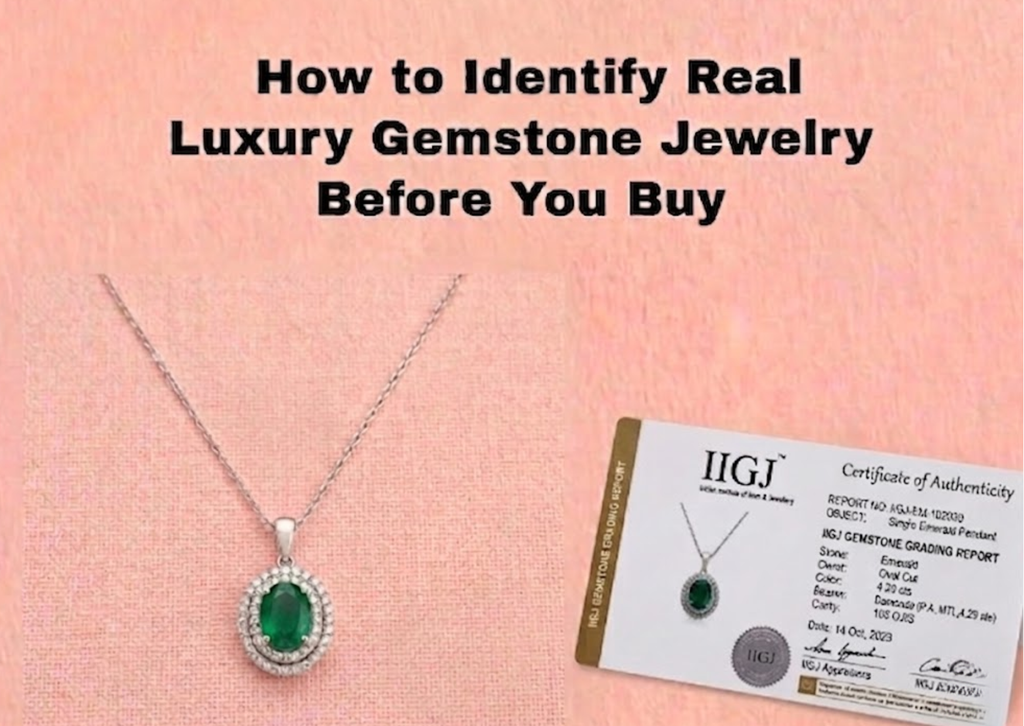
How to Identify Real Luxury Gemstone Jewelry Before You Buy: The Ultimate Expert Guide
Investing in luxury gemstone jewelry is more than just a fashion statement; it is often a significant financial milestone or a legacy piece meant to be passed down through generations. However, the market is saturated with "simulants," "lab-grown" alternatives, and high-quality fakes that can fool even a seasoned eye.
If you are looking to acquire authentic precious stones, high-end jewelry, or certified natural emeralds, this guide will help you navigate the nuances of the trade.
1. The Power of Documentation: GIA and Beyond
The first rule of buying investment-grade gemstones is simple: Never buy on trust alone. Genuine luxury pieces always come with a pedigree.
-
The Gold Standard: Look for certificates from the Gemological Institute of America (GIA), SSEF, or Gubelin. These labs are globally recognized for their stringent testing.
-
The Report Details: A legitimate certificate will specify if the stone is natural, its geographic origin (e.g., Burmese Ruby vs. Thai Ruby), and any treatments it has undergone.
-
Verify the ID: Most modern luxury stones have a microscopic laser inscription on the girdle that matches the number on the certificate.
2. Understanding "Treatments" vs. "Synthetics"
Not all non-natural elements mean a stone is "fake," but they drastically affect the luxury jewelry valuation.
| Feature | Natural Gemstone | Lab-Grown (Synthetic) | Simulant (Fake) |
| Origin | Earth-mined over millions of years. | Created in a lab with the same chemical DNA. | Different material (Glass/Cubic Zirconia). |
| Value | High & Appreciates. | Low Resale Value. | Negligible. |
| Inclusions | Unique "birthmarks" or flaws. | Often too perfect or "flux" patterns. | Bubbles or no internal structure. |
3. The "Inclusion" Inspection
In the world of high-jewelry, perfection is actually a red flag. Nature is messy. Using a 10x jeweler’s loupe, look for:
-
Fingerprint Inclusions: Tiny liquid-filled tubes that look like fingerprints, common in sapphires.
-
Jardin (The Garden): Natural emeralds almost always have internal fractures and minerals that look like moss or branches. A crystal-clear emerald at a low price is almost certainly synthetic or glass.
-
Silk: Fine, needle-like inclusions (rutile) that give rubies a soft glow.
4. The Settings and Craftsmanship
Authentic luxury jewelry brands (like Cartier, Van Cleef & Arpels, or Tiffany & Co.) do not cut corners on the metalwork.
-
Hallmarking: Check for stamps like "750" (18k Gold), "950" (Platinum), or "PT".
-
The "Under-Gallery": Flip the ring or pendant over. Real luxury pieces are finished as beautifully on the back as they are on the front. If the back looks jagged, hollow, or poorly polished, the stone is likely a fake.
-
Weight: Gold and Platinum are dense. A luxury piece should feel "heavy" for its size. If it feels like light plastic or tin, walk away.
5. Light and Color Behavior
Different gemstones react to light in specific ways. Knowing these can help you spot genuine precious stones:
-
The Fog Test: Breathe on the stone. On a real diamond or high-quality gemstone, the fog should dissipate almost instantly. If it lingers for a few seconds, it might be glass or a simulant.
-
Doubling (Birefringence): If you look through a faceted stone and see two of every facet edge, it might be a Moissanite or Zircon, not a Diamond or Sapphire.
-
Refractive Index: Real gems bend light intensely. If you place a loose stone face-down on a piece of newspaper and can clearly read the text through it, the stone's refractive index is too low to be a high-end gem.
The "Paper Trail" of Luxury: Certification and Provenance
In the world of fine jewelry, your most powerful tool isn't a magnifying glass—it’s a piece of paper. However, not all certificates are created equal.
The Reputable Labs
For a piece to be considered luxury gemstone jewelry, it should be accompanied by a report from a top-tier, independent laboratory.
-
GIA (Gemological Institute of America): The global authority for diamonds and colored stones.
-
SSEF and Gübelin: Based in Switzerland, these are the world leaders for origin determination (e.g., verifying if a sapphire is truly from Kashmir).
-
GRS (GemResearch Swisslab): Highly respected for grading the "pigeon blood" color in rubies.
What to Look for on the Report
A genuine luxury jewelry valuation depends on three things: Origin, Treatment, and Authenticity. If the report mentions "diffusion," "glass-filling," or "synthetic," the stone is not a natural luxury gem.
The Loupe Test: Finding Beauty in Imperfection
One of the biggest misconceptions in buying gemstones is that they should be perfectly clear. In reality, nature is rarely "clean."
Natural Inclusions vs. Synthetic Flaws
Using a 10x jeweler’s loupe, look inside the stone.
-
The "Jardin" in Emeralds: Natural emeralds are almost always "included." These internal moss-like patterns are called a jardin (French for garden). If an emerald is crystal clear and cheap, it’s likely glass or synthetic.
-
Silk in Rubies/Sapphires: Look for tiny, needle-like inclusions that intersect at angles. This "silk" is a hallmark of natural precious stones.
-
The Danger of Bubbles: If you see perfectly round air bubbles, you are looking at glass or "paste" jewelry, not a gemstone.
Growth Lines
Natural gems grow in a hexagonal or trigonal habit, often showing straight or angular growth lines. In contrast, many lab-grown gemstones (created via the Verneuil process) show curved striae—faint, curved lines like the grooves on a vinyl record.
Metalwork: The Anatomy of Craftsmanship
A high-value gemstone will never be set in cheap metal. Examining the setting is a shortcut to identifying authentic luxury brands.
Hallmarks and Stamps
Check the inside of the band or the clasp for:
-
18K or 750: Indicates 18-karat gold (75% purity).
-
PT950: Indicates 950 Platinum.
-
Brand Signatures: Look for crisp, laser-engraved or stamped logos from houses like Cartier, Van Cleef & Arpels, or Harry Winston. Fakes often have "blurry" or shallow engravings.
The "Heft" Factor
Luxury metals like Platinum and 18K gold are significantly denser than silver or brass. A genuine luxury ring should feel surprisingly heavy for its size. If it feels "light" or "tinny," it’s a major red flag.
Optical Physics: How Light Behaves
You don't need a PhD in physics, but you do need to know how genuine gemstones interact with light.
| Gemstone | The Secret Test |
| Diamond | The Fog Test: Breathe on it. Diamonds conduct heat instantly; the fog should vanish immediately. If it stays for 2-3 seconds, it’s likely cubic zirconia. |
| Sapphire | Color Zoning: Look at the stone against a white background. Natural sapphires often have "stripes" of darker and lighter blue. Synthetics are usually unnaturally uniform. |
| Opal |
The Side Profile: Look at the opal from the side. If you see distinct layers (a dark base and a clear top), it’s a "doublet" or "triplet"—not a solid, high-value opal. |
The "Too Good to Be True" Rule (Market Value)
Understanding luxury jewelry pricing is essential. Real gemstones are rare, and their price reflects that.
-
Red Flag: A 2-carat, "unheated" Royal Blue Sapphire offered for $500. In the real luxury gemstone market, such a stone would command $10,000 to $20,000+.
-
The Source: Authentic luxury pieces are sold through reputable auction houses, established boutiques, or certified dealers. Buying "high-end" jewelry from a street market or an unverified social media ad is the easiest way to lose your investment.
Professional SEO Tips for Collectors
When researching your purchase online, use specific gemstone SEO keywords to find the most reputable data:
-
GIA certified natural ruby price
-
Conflict-free luxury diamonds
-
Investment-grade untreated gemstones
-
Handmade high-jewelry craftsmanship
-
Gemstone origin verification